Editorial Team
 16 November 2026
Last Updated: November 15, 2026


Quick Summary
A nasal spray and honey cough syrup bundle pairs a daily nasal rinse spray with a cough and throat syrup, both built around Medical Grade Manuka Honey from ManukaGuard. The spray clears the nasal passages while the syrup calms the throat, so the two cover different points on the same airway.
- Deep Nasal Cleanse ($17.89) suits daily cleansing and hydration without a specific seasonal trigger.
- Deep Allercleanse ($20.79) is positioned for allergy season routines and pollen-heavy periods.
- Extra Strength Allercleanse ($18.99) is recommended for days when pollen is visible or allergy-season winds are blowing.
- Honey should not be given to infants under 12 months, and bee-allergic people should avoid honey-based sprays.
Table of Contents
- What a Nasal Spray and Honey Cough Syrup Bundle Includes
- Comparing the Deep Nasal Cleanse, Deep Allercleanse and Extra Strength Allercleanse Sprays
- How Honey Cough Syrup Fits a Cough and Throat Routine
- Children's Cough Syrup Dosage and Age Guidance
- Choosing Your Bundle and Starting Your Routine
- Frequently Asked Questions
What a Nasal Spray and Honey Cough Syrup Bundle Includes
A nasal spray and honey cough syrup bundle pairs a daily nasal rinse spray with a cough and throat syrup, both built around Medical Grade Manuka Honey from ManukaGuard.
The nasal side is a fine-mist spray. ManukaGuard's Deep Nasal Cleanse, Deep Allercleanse and Extra Strength Allercleanse sprays are each listed with the same core ingredients, including Medical Grade Manuka Honey, saline solution, vegetable glycerin and purified water.
Bundle buyers should check which spray is paired with the syrup, because the listings describe different strengths and uses. The clearest difference is in the label guidance on when to use each product, which is covered in the next section.
Comparing the Deep Nasal Cleanse, Deep Allercleanse and Extra Strength Allercleanse Sprays
ManukaGuard lists three nasal sprays that a bundle might include. All three cleanse the nasal passages of airborne irritants such as dust, pet dander and bed mites, and all three share the same basic formula: Medical Grade Manuka Honey, saline solution, vegetable glycerin and purified water. The differences are in positioning, strength and when each is meant to be used.
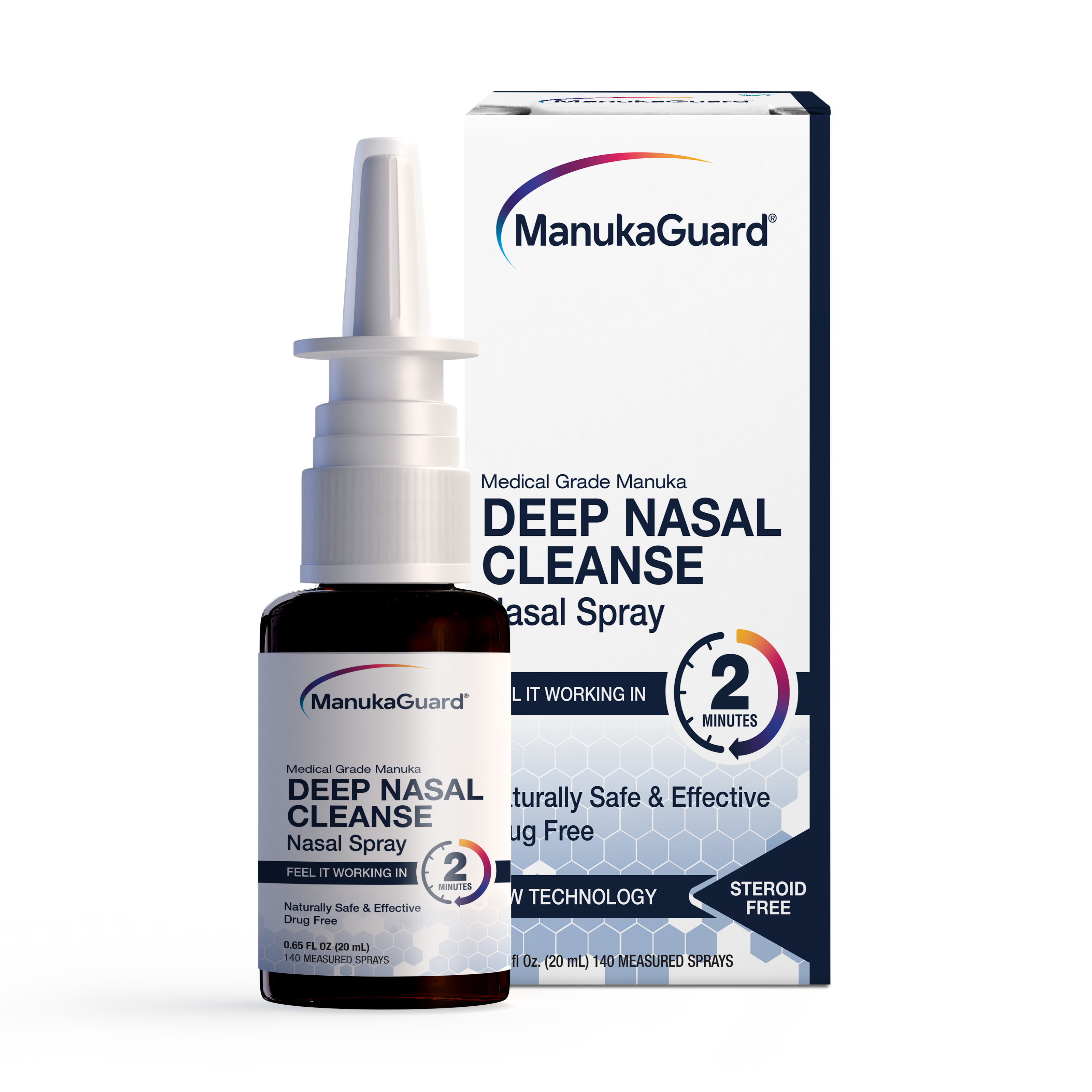
Deep Nasal Cleanse ($17.89) is the everyday option. The listing describes it for use when there is a buildup in the nasal passages and for daily cleansing and hydration.
Deep Allercleanse ($20.79) is positioned for allergy season. The listing recommends making it part of your allergy season routine and describes it for buildup in the nasal passages or daily cleansing. It is the middle option for people with predictable seasonal triggers.
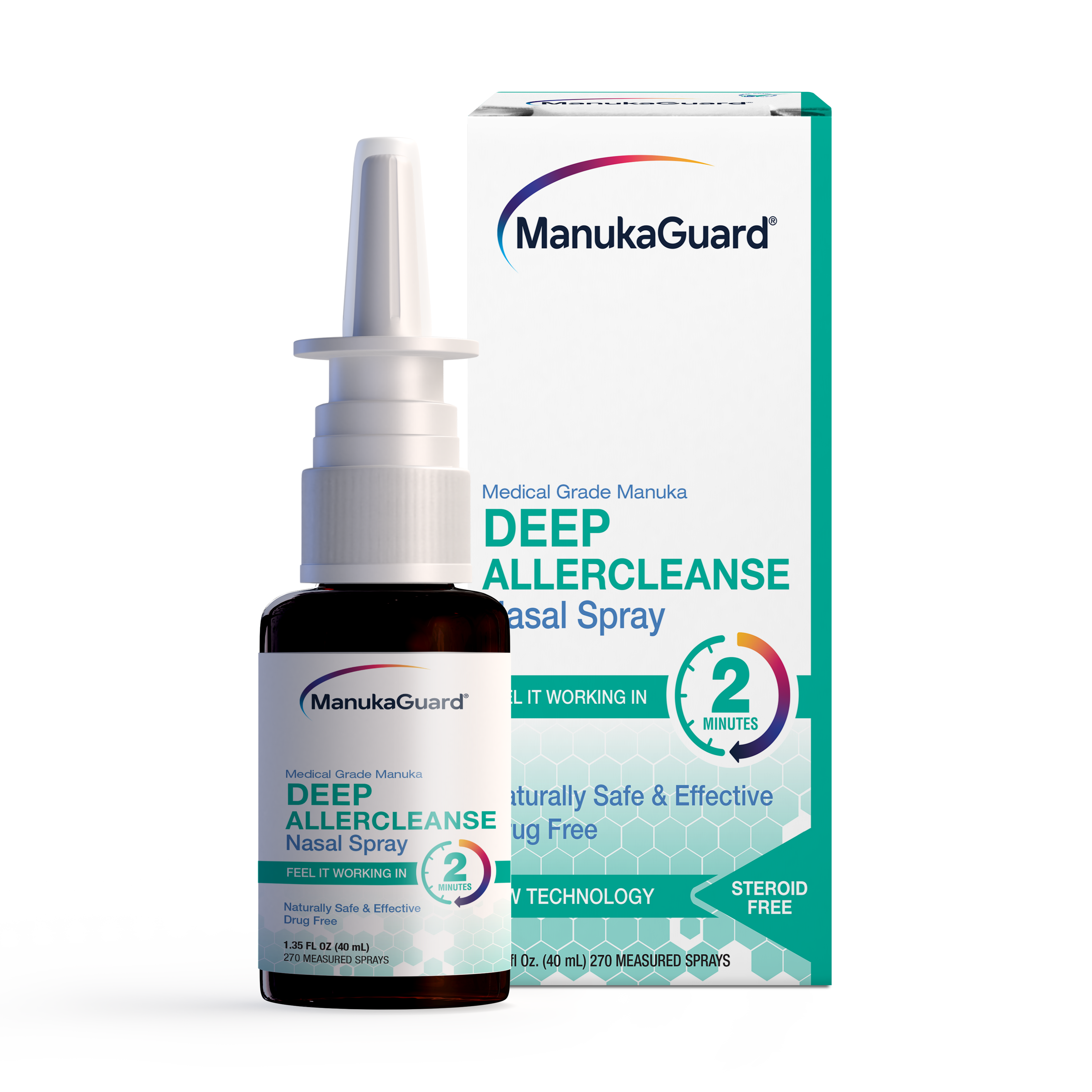
Extra Strength Allercleanse ($18.99) is formulated using what ManukaGuard calls some of its strongest Medical Grade Manuka Honey. The listing describes it for days when pollen is visible or allergy-season winds are blowing.
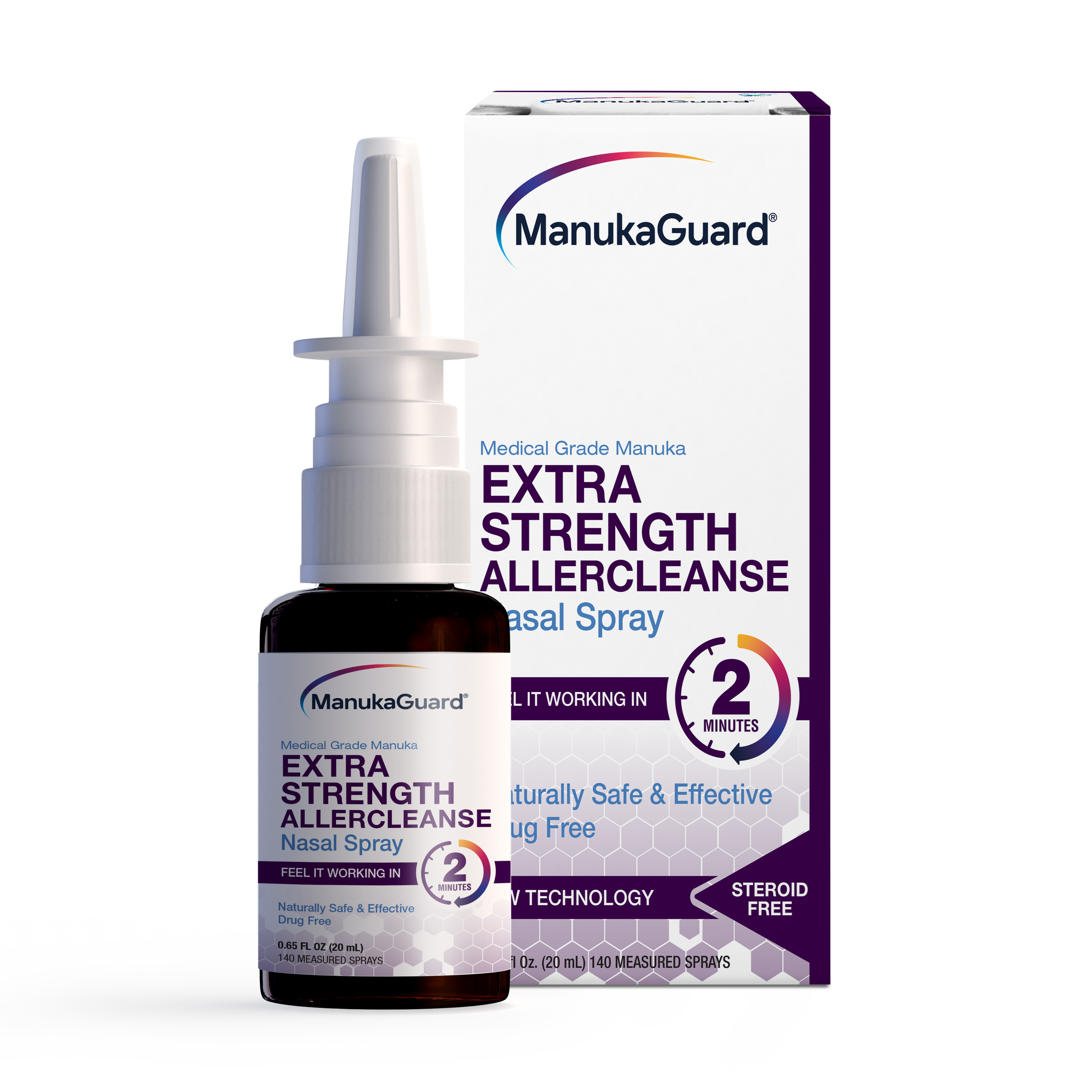
- Best for Deep Nasal Cleanse: Daily cleansing and hydration without a specific seasonal trigger.
- Best for Deep Allercleanse: Allergy season routines and pollen-heavy periods.
- Best for Extra Strength Allercleanse: High-pollen days and heavier buildup.
What the Spray Actually Does in the Nose
A nasal spray works on contact. The saline base loosens and flushes mucus and airborne particles from the nasal passages, while the vegetable glycerin holds moisture against the nasal lining so it does not dry out.
That mechanism matters for bundle logic. The spray handles the upper airway, the nose and sinus openings, where congestion and irritant buildup start. The syrup handles the throat and cough side further down. Using both covers two points on the same airway rather than doubling up on one.
Saline-Only vs. Honey-Based: How to Decide
A plain saline spray and a honey-based spray both moisturize the nasal passages. The practical differences:
- Ingredients: Saline-only products are typically salt and water. ManukaGuard's sprays add Medical Grade Manuka Honey, vegetable glycerin and purified water.
- Feel: Glycerin and honey leave a slightly coated, moisturized feel; plain saline feels like water and dries faster.
- Use case: Saline-only suits people who want the simplest possible rinse. Honey-based formulas suit people who prefer a moisturized finish and are comfortable with a bee-derived ingredient.
Watch out: anyone allergic to bees or bee products should not use a honey-based nasal spray, and the label advises speaking with a doctor first after any unexpected reaction. Material may wash out of the nose after use, so keep tissues nearby.
Reading the Label Before You Buy
Before choosing a spray, check three things on the listing: the ingredient list (confirm the honey and glycerin content), the intended-use language (daily vs. allergy season vs. high-pollen days), and the warning block (bee allergy, pregnancy, nursing, medication use or a medical condition). The spray you pick should match the symptom pattern you actually have, not just the strongest-sounding name.
The article lists three nasal sprays a bundle might include, each positioned for a different use.
| Spray | Price | Best for |
|---|---|---|
| Deep Nasal Cleanse | $17.89 | Daily cleansing and hydration; buildup in the nasal passages |
| Deep Allercleanse | $20.79 | Allergy season routine; buildup or daily cleansing |
| Extra Strength Allercleanse | $18.99 | Days when pollen is visible or allergy-season winds are blowing |
Price
How Honey Cough Syrup Fits a Cough and Throat Routine
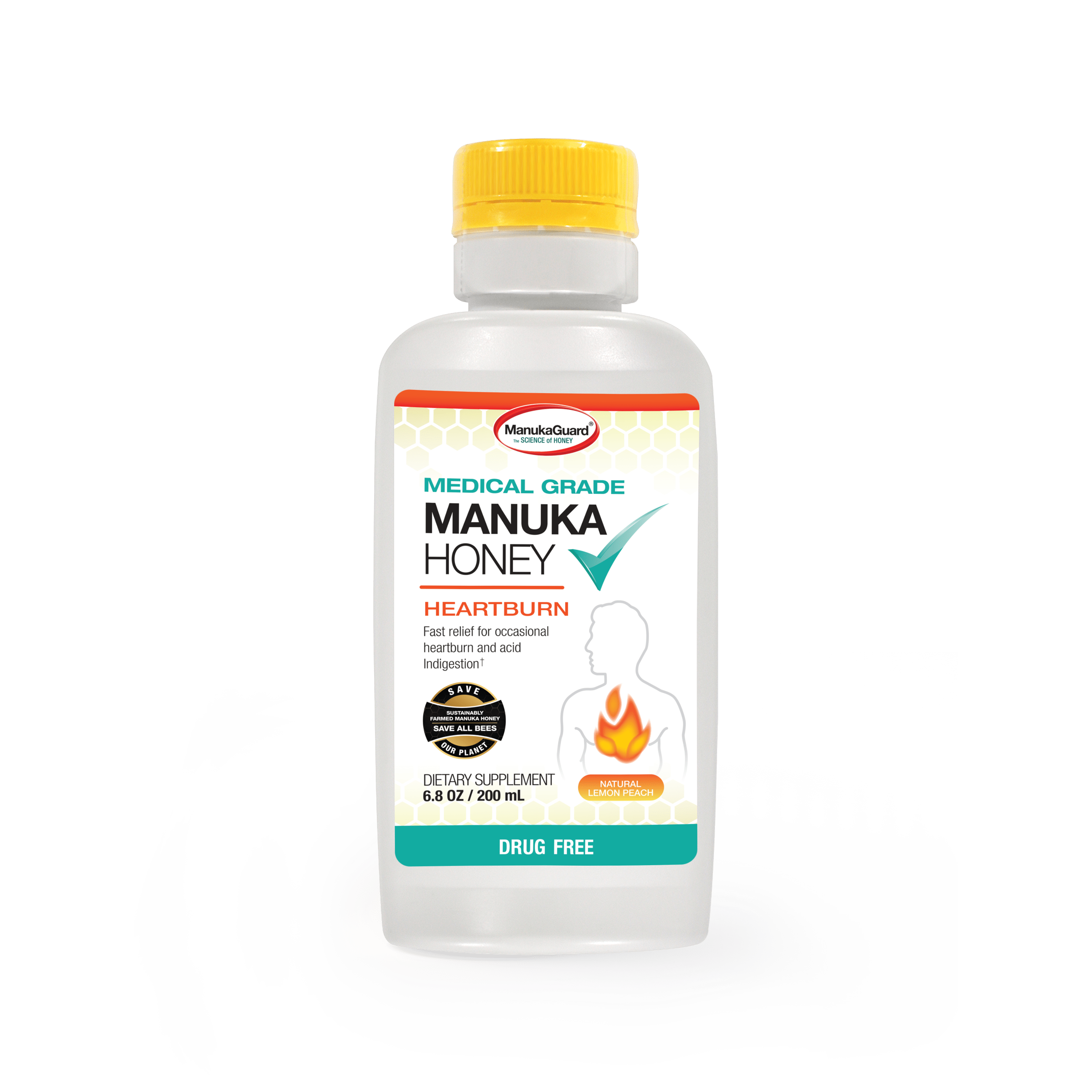
The Cough & Throat Syrup is described as an all-natural alternative to conventional cough and throat syrup. It is intended to calm coughs and dry throats linked to hoarseness and environmental irritants.



Honey is one of the older remedies for cough, and researchers have studied it in children. That cautious reading matters because evidence for honey in cough care does not establish the value of unrelated remedies such as Vampire Tx.
In a routine, the syrup covers the throat and cough side while the nasal spray handles congestion and buildup. Keep the two products separate in your routine so you can track which one you are using for which symptom.
Children's Cough Syrup Dosage and Age Guidance
The listings contain a clear safety rule for children's use. Keep the syrup out of reach of children, and check with a doctor before use if anyone is pregnant, nursing, taking medication or has a medical condition. The Cough & Throat Syrup label also warns against use by anyone allergic to bees, bee products or citric acid.
The 12-Month Rule
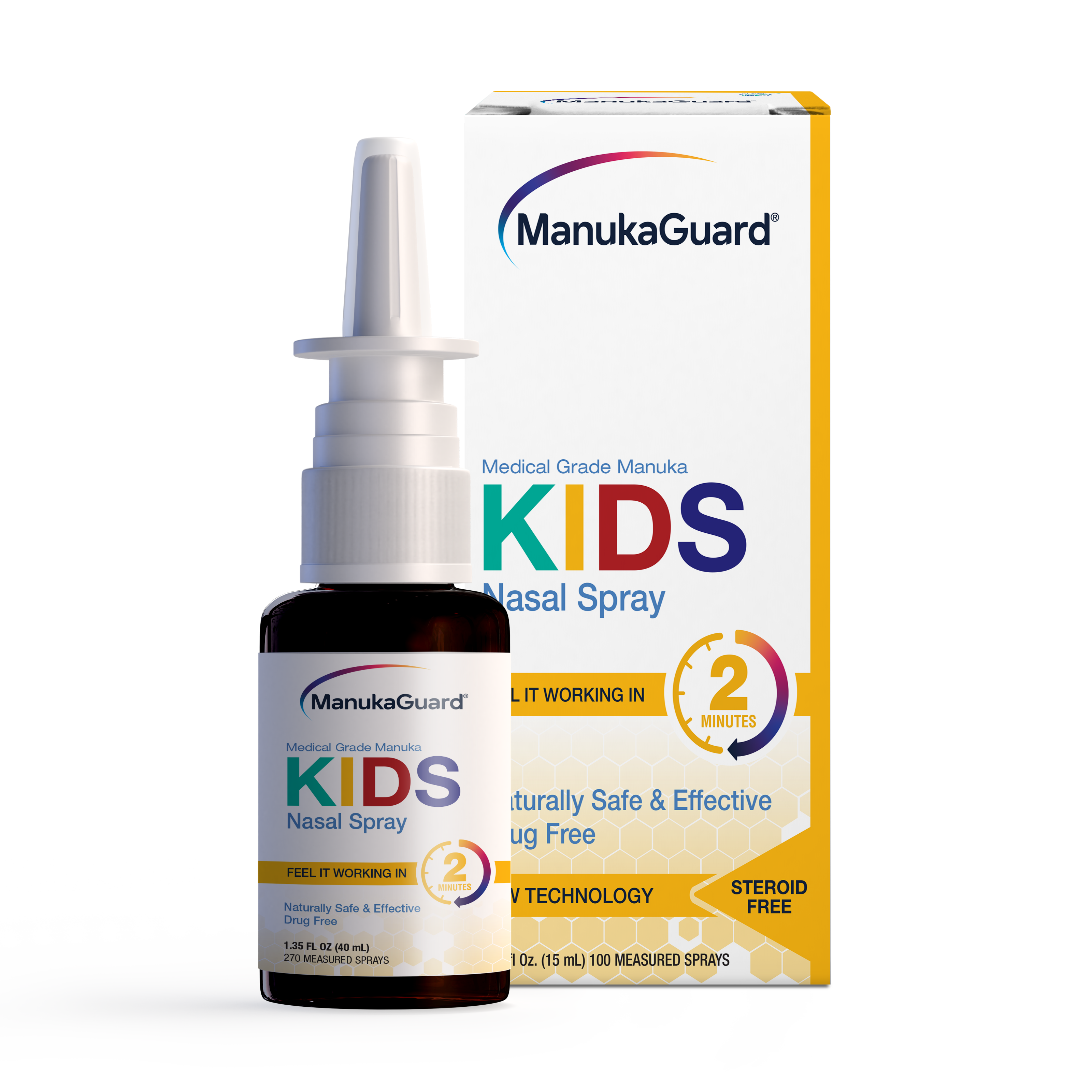
Parents should not give honey-based products to infants, and should check age guidance with a pediatrician. This is the single most important age line in the whole bundle: honey, including Medical Grade Manuka Honey, is not for infants under 12 months.
Age-Banded Guidance
- Under 12 months: No honey-based syrup or honey-based nasal spray. Talk to a pediatrician about alternatives.
- 12 months and older: Confirm the serving size on the package and check with a doctor if the child has any medical condition or takes medication.
- Kids Nasal Spray: Follow the age guidance printed on that product's label, it is separate from the syrup label and should not be assumed to match.
Measure any dose using the serving listed on the label rather than estimating with a kitchen spoon. A measured dosing cup or syringe gives a consistent amount; a household spoon does not.
What the Research Actually Says
A review comparing honey with anti-cough medication in pediatric patients suggests honey may be effective for children older than 12 months, though it does not offer a precise effect estimate. Cochrane reports that honey probably reduces cough duration compared with placebo but notes there is no strong evidence for or against its use. Parents looking at a Penn State study on honey as an alternative for childhood cough will see the same pattern: honey was described as an effective and safe alternative, but the reported study details were limited.
Additives to Check Before Giving It to a Child
The syrup combines Medical Grade Manuka Honey with apple cider vinegar, olive leaf extract, elecampane root, licorice root and ginger root. Before giving it to a child, read the full ingredient list and check with a doctor or pediatrician before use.
If a child's cough persists, worsens, or comes with fever or trouble breathing, see a healthcare provider rather than continuing home care.
Choosing Your Bundle and Starting Your Routine
A bundle makes sense when you want both a nasal product and a throat syrup for the same routine. Start by asking who will use it and what they need. A daily cleanser suits someone managing ongoing dryness or buildup. An allergy-season spray suits someone with predictable pollen exposure.
For new customers, Deep Nasal Cleanse is the simplest starting point. Those with predictable allergy seasons may prefer Deep Allercleanse, and those who need extra strength on high-pollen days can look at Extra Strength Allercleanse.
Begin with one spray and the syrup, use them as the label directs for a few weeks, and note what changes.
Frequently Asked Questions
What should I look for in a nasal spray and honey cough syrup bundle?
Check the ingredient list, the age guidance on each label and the MGO rating printed on the Medical Grade Manuka Honey. The Cough & Throat Syrup is listed at MGO 600, and the Extra Strength Allercleanse Nasal Spray is also MGO 600, so the two products can be compared directly. Confirm that the nasal spray suits your situation, whether that is daily cleansing or high-pollen days, and that the syrup's warnings match who will be using it. Bundle prices are only worth comparing against buying each item separately once you know both products fit the routine.
Can you use a nasal spray and honey cough syrup together?
The product listings for the ManukaGuard nasal sprays and the Cough & Throat Syrup do not describe interactions with each other, so this article does not make that claim. Both labels say to consult a doctor before use if you are pregnant, nursing, taking medication or have a medical condition, and to avoid the products if you are allergic to bees, bee products or citric acid. Those warnings apply to either product, so a healthcare professional should review any combined use, especially for children.
Is honey cough syrup safe for children?
The Cough & Throat Syrup label says to keep it out of reach of children and to consult a doctor before use if the person has a medical condition. Honey is generally not recommended for infants, so check the age guidance on the label and ask a pediatrician before giving any honey-based syrup to a young child. Parents should not assume a natural product is safe at any age without that check.
Does a bundle cost less than buying the nasal spray and cough syrup separately?
Current listed prices are $17.49 for the Cough & Throat Syrup, $17.89 for the Deep Nasal Cleanse Nasal Spray, $18.99 for the Extra Strength Allercleanse Nasal Spray, $19.99 for the Everyday Immune Cleanse Nasal Spray and $20.79 for the Deep Allercleanse Nasal Spray. Compare the total of the items you plan to buy against any bundle offer you see at checkout, because the separate prices above are the only authoritative figures available for this comparison.


 18.November.2026