Editorial Team
 30 October 2026
Last Updated: October 30, 2026


Quick Summary
Manuka honey immune support rests mainly on laboratory findings, not proven human outcomes. A 2022 lab study found a 5.8-kDa component stimulated immune cells via TLR4, but human evidence is limited and does not establish that eating it prevents infections or boosts immunity.
- Methylglyoxal (MGO) is the compound most responsible for Manuka honey's unusual antibacterial strength.
- No large, long-term randomized trial has established an immune-boosting dose or outcome for Manuka honey.
- A common approach is one teaspoon to one tablespoon daily, kept below boiling heat.
- Never give honey of any kind to children under 12 months due to infant botulism risk.
- Check that the label states MGO content explicitly rather than using vague language.
Table of Contents
- How Manuka Honey Works on the Immune System
- Antibacterial, Antiviral, and Antifungal Activity in Laboratory Studies
- What Human Clinical Evidence Actually Shows About Immune Support
- Manuka Honey Benefits and Side Effects You Should Know
- How Much Manuka Honey to Take Daily
- Manuka honey MGO rating explained
- Manuka Honey for Sore Throat and Cold Symptoms
- Safety, Contraindications, and Medication Considerations
- Choosing a Medical-Grade Manuka Honey Product
- Frequently Asked Questions
How Manuka Honey Works on the Immune System
Manuka honey is a monofloral honey produced by bees that feed on the flowers of the Leptospermum scoparium bush, and it contains compounds that ordinary honey does not carry in the same concentration. At ManukaGuard, we explain this distinction to customers constantly, because grocery-store honey and medical-grade Manuka honey are not interchangeable. A 2022 laboratory study indexed by PubMed Central characterized immunomodulatory responses to Manuka honey and reported that a specific 5.8-kDa component stimulated immune cells via TLR4, a receptor involved in the body's innate immune signaling (Characterization of immunomodulatory responses induced by Manuka honey). That is a real finding, and it is also a lab finding. Keep that distinction in mind for the rest of this guide, because it separates useful claims from marketing noise.
Methylglyoxal and the Compounds Behind the Hype
Methylglyoxal (MGO) is the naturally occurring compound most responsible for Manuka honey's unusual antibacterial strength. It works alongside hydrogen peroxide, phenolic compounds, and flavonoids, which appear in honey generally but at lower levels. A peer-reviewed review of Manuka honey's antibacterial activity and components notes that this activity can occur independently of triggering inflammatory cytokines during an innate immune response (Antibacterial activity of Manuka honey and its components). Translation: the antimicrobial effect and the immune-signaling effect are separate mechanisms, and both are still being mapped. What most guides miss is that MGO content varies enormously between jars, which is why the rating on the label matters more than the word "Manuka."
Antibacterial, Antiviral, and Antifungal Activity in Laboratory Studies
Laboratory studies show that Manuka honey inhibits a range of bacteria, and the evidence for antifungal and antiviral activity is thinner but growing. Test-tube studies are the backbone of the Manuka honey literature, and they are genuinely impressive in a petri dish. The caveat is structural: a dish is not a body. Researchers can measure how honey affects microorganisms directly, but they cannot easily replicate human digestion, absorption, and immune coordination in a lab. Many practitioners treat these results as a starting hypothesis rather than a conclusion. The honest summary is that Manuka honey has shown antimicrobial activity against some bacteria and microorganisms in controlled laboratory settings, while human outcomes are not established.
What Human Clinical Evidence Actually Shows About Immune Support
Human clinical evidence on Manuka honey is limited, and the strongest claims rest on laboratory work rather than large trials. That is the part most articles skip. The 2022 study summary explicitly notes conflicting evidence about Manuka honey's properties, and the available research does not establish that eating it prevents infections or improves immune outcomes in people. This is where immune support and infection treatment part ways. Eating a balanced diet and staying hydrated are general daily habits. Preventing or treating an infection is a medical claim, and no jar of honey earns that label. We tell customers this plainly: use Manuka honey as part of a wellness routine, not as a substitute for medical care.
How to Read the Evidence: Test-Tube, Animal, and Human Studies
When you see a headline about Manuka honey and immunity, the first question to ask is what kind of study produced it. The evidence falls into three tiers, and they are not interchangeable.
Laboratory (in vitro) studies are the most common. Researchers apply Manuka honey or its isolated compounds to bacteria, viruses, or cultured immune cells and measure the response. These studies are useful for identifying mechanisms, for example, the 2022 laboratory work indexed by PubMed Central that characterized a 5.8-kDa component stimulating immune cells via TLR4 (Characterization of immunomodulatory responses induced by Manuka honey). But a petri dish does not replicate human digestion, absorption, or the coordinated response of a living immune system.
Animal studies add a living system but still do not predict human outcomes reliably. Doses, metabolism, and immune physiology differ. Most animal work on honey focuses on wound healing or gut effects rather than broad immune function.
Human studies are the only tier that can support claims about immune outcomes in people. Here the record is thin. Most human research on Manuka honey involves small numbers of participants and focuses on specific, measurable endpoints, sore-throat relief, cough frequency, wound healing, or digestive comfort, rather than "immune support" as a general outcome. A common pattern in the published literature is a randomized trial with a few dozen participants comparing honey to a placebo or to ordinary honey, measuring symptom scores over days rather than immune markers over months. Those studies can be informative for symptom relief, but they are not designed to show that honey prevents infection or strengthens immune function.
What the Human Studies Do and Do Not Show
What they do show: honey, including Manuka, can soothe a sore throat in some small studies. What they do not show: that eating Manuka honey prevents colds, reduces infection rates, or improves measurable immune markers in healthy adults. No large, long-term randomized trial has established an immune-boosting dose or outcome.
This matters because the gap between a promising lab result and a proven human benefit is where most marketing lives. A test-tube finding that a compound kills bacteria does not mean a spoonful of honey will fight an infection in your body. Stomach acid, dilution, digestion, and the complexity of human immunity all intervene. The honest position is that Manuka honey is a food with limited human research, not a proven immune therapy.
The Gap Between Test-Tube Results and Real Outcomes
The gap between test-tube results and real outcomes is the single most important limitation to understand. A compound that kills bacteria on a lab plate may behave differently once it meets stomach acid, gets diluted in the bloodstream, or interacts with other foods. Human studies on Manuka honey tend to be small, and many focus on specific uses like wound care or sore-throat relief rather than broad immune function. That does not make the product useless. It means the evidence quality is uneven, and anyone who tells you otherwise is selling rather than explaining.
Manuka Honey Benefits and Side Effects You Should Know
Manuka honey benefits and side effects both deserve a straight answer. On the benefit side, a common use is soothing a dry or sore throat. On the side-effect side, honey is still sugar. It raises blood glucose, it can irritate a sensitive stomach in large amounts, and it is not suitable for infants under one year due to botulism risk. People with pollen or bee-product allergies should introduce it cautiously. A common mistake is treating "natural" as "risk-free." It is not.
How Much Manuka Honey to Take Daily
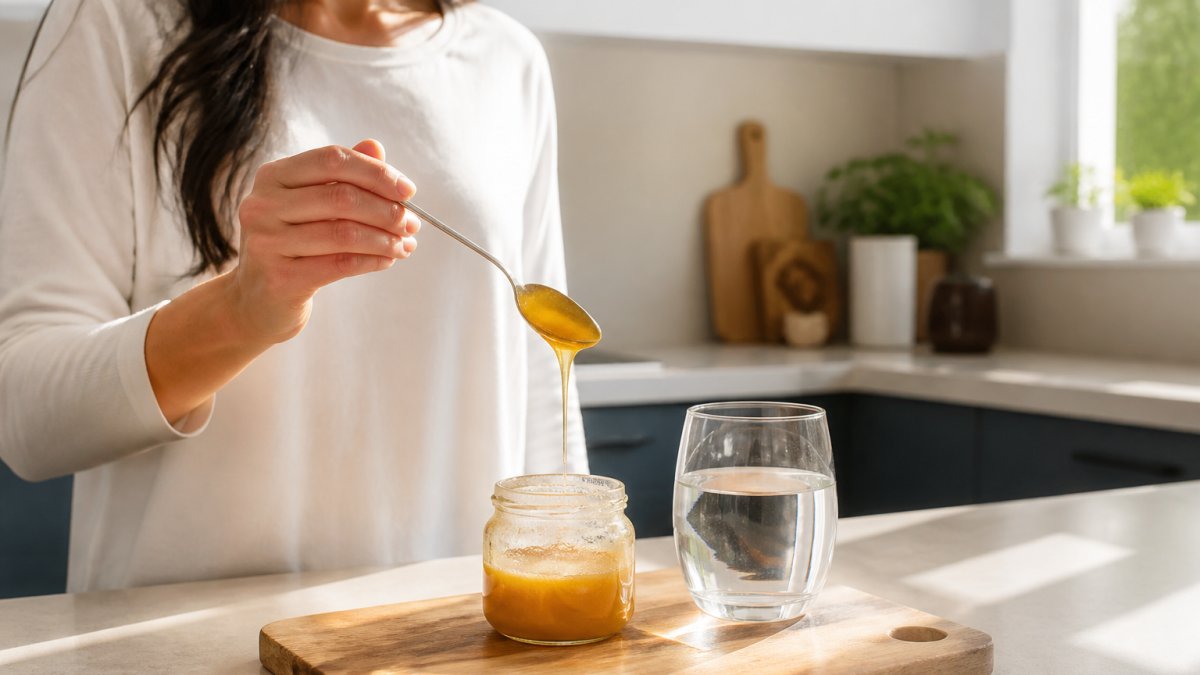
There is no official daily dose for Manuka honey, and anyone quoting a precise number is guessing. A common approach is one teaspoon to one tablespoon per day, taken straight, stirred into warm (not boiling) water, or spread on food. Heat degrades some of the active compounds, so keep it below the boiling point. For throat soothing, many people take a teaspoon as needed rather than on a fixed schedule. Start with a small amount for the first week to check your stomach tolerates it, then adjust. If you are managing blood sugar, treat a tablespoon of honey as you would any other sugar in your daily count.
| Daily Amount | Best For | Frequency | Notes |
|---|---|---|---|
| 1 teaspoon | Daily wellness routine | Once daily | Good starting point for sensitive stomachs |
| 1 tablespoon | Digestive support, dry throat | Once or twice daily | Count toward daily sugar intake |
| 1 teaspoon as needed | Sore throat soothing | Up to a few times daily | Let it dissolve slowly rather than swallowing fast |
| Any amount | Infants under 1 year | Not recommended | Botulism risk applies to all honey |
Manuka honey MGO rating explained
The MGO rating on a Manuka honey label tells you the measured methylglyoxal content in milligrams per kilogram, and it is the most useful number on the jar. Higher MGO indicates higher methylglyoxal content, which is measured in laboratory testing. The rating is a potency measure and is not a dose recommendation. Check that the label states MGO content explicitly rather than using vague language.
Everyday Immune Cleanse Nasal Spray, Medical Grade Manuka Honey →


Manuka Honey for Sore Throat and Cold Symptoms
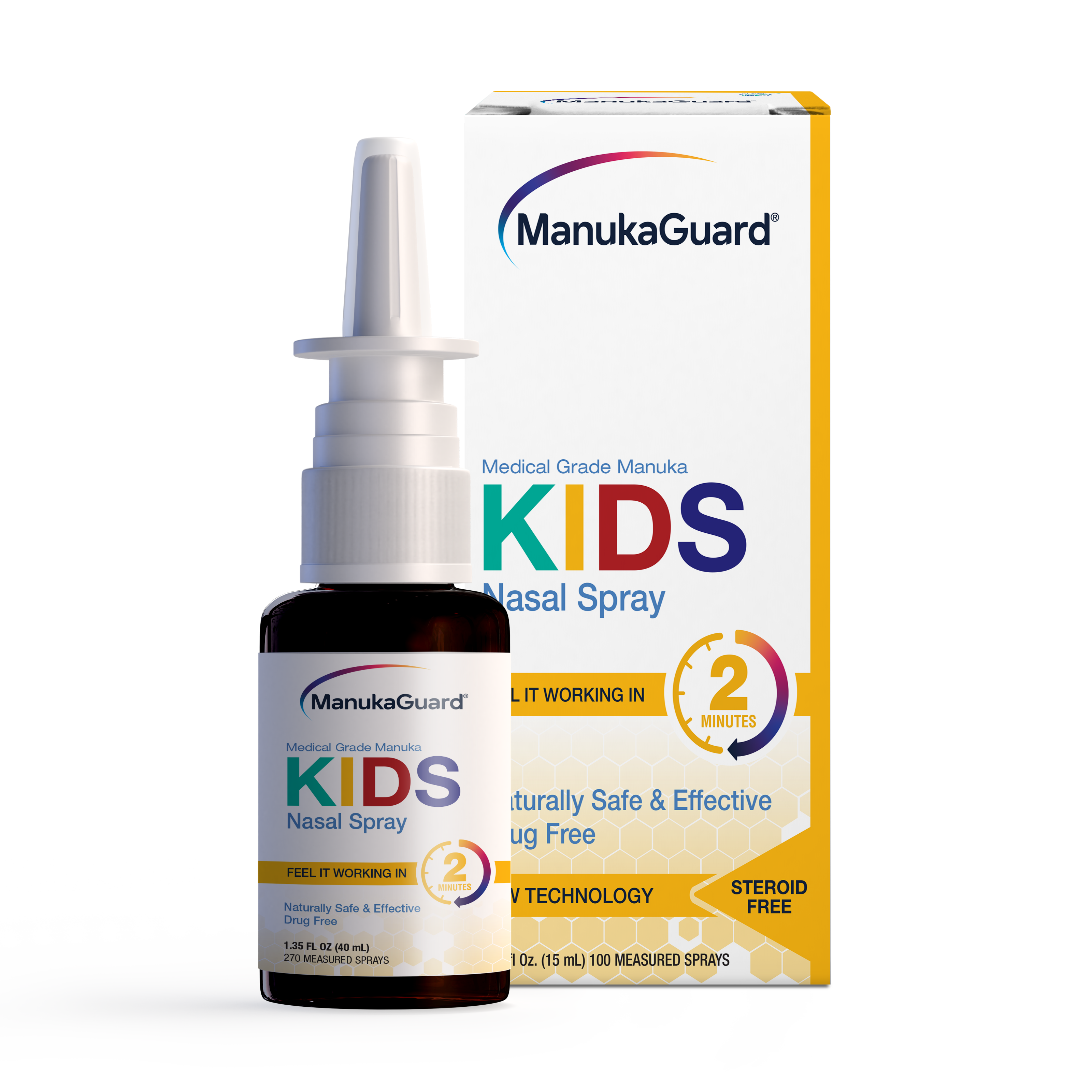
Honey is commonly used to soothe a sore throat. Honey will not cure a cold, and it pairs well with rest and fluids. For nasal congestion and sinus irritation, a Manuka honey nasal spray is one delivery option, which is a different route than eating honey. Our Everyday Immune Cleanse Nasal Spray uses 30% Medical Grade Manuka Honey MGO 600 in a fine mist for exactly this purpose. Readers dealing with ongoing congestion may also want our guide to natural remedies for chronic congestion.

Safety, Contraindications, and Medication Considerations
Safety comes down to three groups: infants, people with diabetes or blood-sugar concerns, and anyone with bee-product allergies. Never give honey of any kind to a child under one year. If you take medication, particularly blood-sugar-lowering drugs, talk to your clinician before adding a daily honey habit, because it is a sugar source and it can interact with how you manage glucose. People on immunosuppressive therapy should ask their doctor before using any product marketed for immune support. Watch out: applying honey to a wound at home is not a substitute for proper wound care, and the evidence for that use comes from clinical settings with medical-grade products, not kitchen jars.
Infant Botulism: Why Honey Is Off-Limits Under One Year
Honey can contain Clostridium botulinum spores, which are harmless to older children and adults but can germinate in an infant's immature digestive tract and cause infant botulism, a rare but serious illness. The Centers for Disease Control and Prevention and the American Academy of Pediatrics both advise against giving honey of any kind, including Manuka honey, to children under 12 months. This applies to honey in food, on a pacifier, or in home remedies. There is no safe amount and no processing method that reliably eliminates the risk for infants. After the first birthday, the risk drops sharply and honey is generally safe.
Allergy and Sensitivity: What to Watch For
Manuka honey is a bee product, so anyone with a known allergy to bee pollen, propolis, royal jelly, or bee venom should be cautious. Reactions can range from mild oral itching or hives to more serious swelling or breathing difficulty. If you have a history of severe allergic reactions, talk to your clinician before trying any new bee product. A common pattern is to start with a very small amount, a quarter teaspoon, and wait to see how your body responds before increasing. People with pollen allergies sometimes report mild oral irritation with raw honey; medical-grade products are filtered but are not guaranteed allergen-free.
Blood Sugar and Diabetes
Honey is sugar. Honey is a sugar source and will raise blood glucose. For people with diabetes or prediabetes, that does not automatically mean no honey, but it does mean counting it. Treat a tablespoon of Manuka honey as you would any other sugar in your daily carbohydrate budget, and monitor your glucose response. If you take insulin or blood-sugar-lowering medication, adding a daily honey habit can affect your numbers, so discuss it with your clinician first. Manuka honey is not a low-glycemic sweetener and should not be marketed as one.
Medication Interactions and Immunosuppression
Beyond blood sugar, there are no well-documented drug interactions with honey itself, but the sugar content matters for anyone managing glucose. People on immunosuppressive therapy, for example, after an organ transplant or for an autoimmune condition, should ask their doctor before using any product marketed for immune support, because stimulating immune signaling is not always desirable in that context. The same caution applies to anyone with an active infection or a compromised immune system: honey is not a treatment, and delaying medical care is the real risk.
Wound Care: Medical-Grade Products Are Not Kitchen Jars
Medical-grade Manuka honey is a different product from kitchen honey and is used under medical supervision in some settings. That is a different product and a different use from eating honey or applying a grocery-store jar to a cut. Do not apply kitchen honey to a wound at home: it is not sterile, it can introduce bacteria, and it is not a substitute for proper wound cleaning and care. If you have a wound that is not healing, see a clinician.
When to Skip Manuka Honey
Skip it if you are allergic to bee products, if you are giving food to a child under one year, or if you are managing a condition where sugar intake must be tightly controlled without medical guidance. And skip the temptation to use it as a substitute for vaccination, sleep, nutrition, or medical treatment, those are the established foundations of immune health, and honey is a supplement to them at best.
Choosing a Medical-Grade Manuka Honey Product
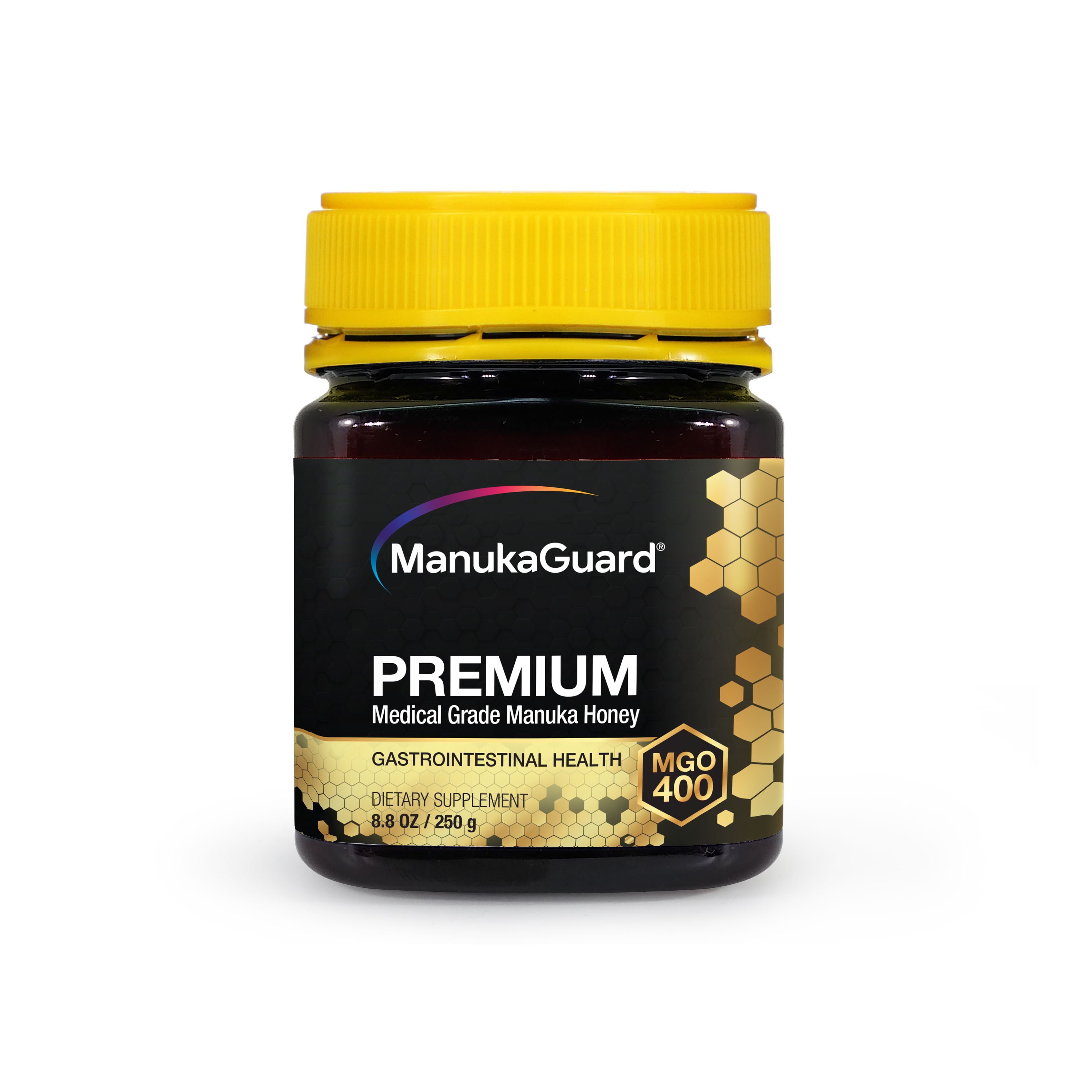
Medical-grade Manuka honey is honey that has been purified to remove non-honey impurities, which is a different product from raw honey on a shelf. When you compare options, look for four things: a stated MGO rating on the label, certification against the New Zealand Ministry for Primary Industries standards, a traceable supply chain, and a clear statement of what the product is for. Our Premium Medical Grade Manuka Honey MGO 400 is a single-ingredient option for daily wellness routines.

The hardest part of buying Manuka honey is separating potency from promises. ManukaGuard sells MGO-certified, laboratory-tested medical-grade Manuka honey with hive-to-medicine-cabinet traceability, guided by a clinical leadership team. If you want a daily option, start with our MGO 400 honey; if congestion or throat irritation is your main concern, our Manuka honey nasal sprays deliver it where you need it. Get started with ManukaGuard and build a wellness routine grounded in evidence rather than hype.
Frequently Asked Questions
Does honey boost your immune system?
Honey contains bioactive compounds that laboratory studies show can stimulate immune cells and fight bacteria. A 2022 laboratory study indexed by PubMed Central examined immunomodulatory responses to Manuka honey in cell-based research. However, researchers note conflicting evidence, and no human trial confirms that eating honey prevents infections. Manuka honey is not a shield against illness.
How much Manuka honey should you eat in a day?
Human dosing studies for immune outcomes are limited, so there is no established daily amount. Consult a healthcare provider before adding a daily honey routine.
What does an MGO rating mean in Manuka honey?
MGO stands for methylglyoxal, the compound responsible for much of Manuka honey's antibacterial activity. The number on the label shows milligrams of methylglyoxal per kilogram of honey. MGO 400 means 400 mg/kg. Higher ratings indicate higher methylglyoxal content in laboratory testing.
Can Manuka honey prevent or treat colds?
There is no clinical evidence that Manuka honey prevents colds or treats infections. Human trials have not confirmed a cold benefit. People with persistent or severe symptoms should see a healthcare provider. Manuka honey works best as a comfort measure alongside rest, fluids, and standard medical care, not as a replacement for it.
Who should avoid taking Manuka honey?
Children under 12 months should never eat honey of any kind because of infant botulism risk. People with pollen or bee product allergies should introduce Manuka honey cautiously and watch for reactions. If you have diabetes, account for honey's sugar content in your carbohydrate intake. Anyone taking medication or managing a chronic condition should check with a healthcare provider before adding a daily honey routine.
How long does it take to see the benefits of Manuka honey?
Because human evidence on outcomes is limited, no timeline for effects is established. Stop use if you notice digestive upset or allergic symptoms.


 02.November.2026